
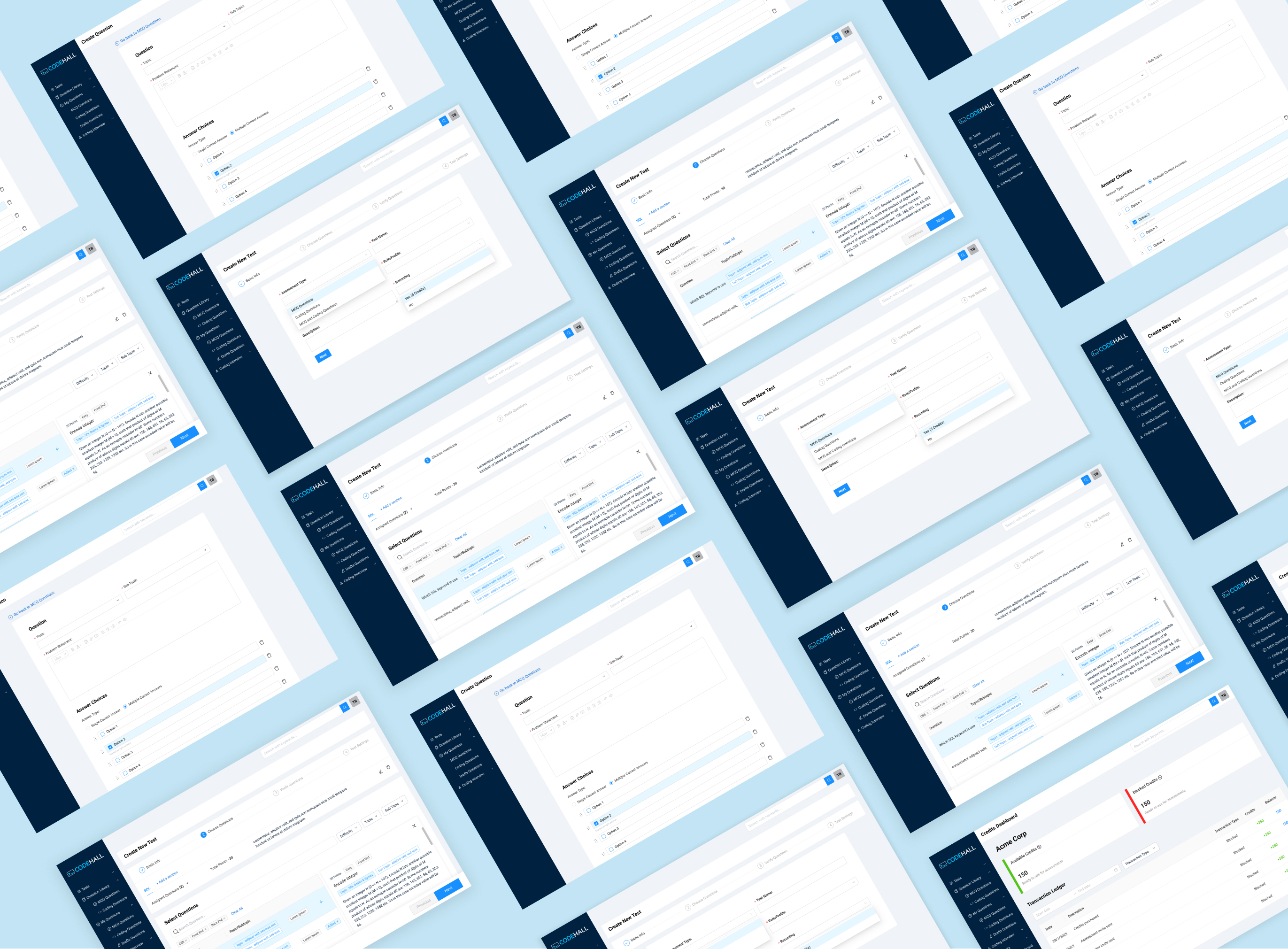
A technology startup, CodeCraft, set out to create an online platform to streamline coding interviews and assessments for software developers. The platform needed to handle various services such as user authentication, coding problem design, code execution, assessment management, and media recording for interviews. To build a robust and scalable backend, CodeCraft utilized Django Rest Framework (DRF) for the API services, containerized the entire infrastructure, and deployed it on Kubernetes using Helm for orchestration. The platform was hosted on AWS Elastic Kubernetes Service (EKS), with observability enabled via Grafana, Prometheus, and Loki.
Team Size
6 MembersDuration
3 monthsPlatform
React Native, FirebaseThe platform needed to have multiple backend services, including user authentication, coding execution, problem design, and media services, while maintaining smooth communication between them.
The system had to handle high traffic, particularly during peak interview seasons, while providing real-time coding execution and video interview recording.
To ensure reliable operation of the platform, there needed to be real-time monitoring of services and efficient log management for debugging and performance analysis.
The platform required a media service that could record live coding interviews between candidates and interviewers.
Authentication Service
Built using DRF, the authentication service managed user registration, login, password resets, and user roles. JWT (JSON Web Tokens) were used for secure and stateless authentication, enabling seamless session management across the microservices.
Coding Problem Design Service
This service allowed administrators and content creators to define coding problems, categorize them by difficulty, and provide sample input/output data. DRF’s flexible serialization helped create, update, and manage problem metadata efficiently.
Code Execution Service
The core feature of the platform, this service allowed users to execute code in multiple programming languages in a sandboxed environment. Code execution was handled by isolated Docker containers for security, with the service providing results such as test case success or failure.
Assessment Service
This service facilitated the creation and management of coding assessments, assigning problems to candidates, and tracking their performance in real-time. The service also recorded test submissions and graded them automatically.
Media Service (Video Interview Recording)
Leveraging AWS Chime SDK, this service enabled real-time video conferencing between candidates and interviewers. It supported recording and storing video/audio streams for future review. AWS Chime handled the video processing while the backend managed interview session metadata and file storage.
Consistency
Each service (authentication, problem design, code execution, assessment, and media) was containerized using Docker.
Docker allowed the team to manage dependencies for each service
independently, ensuring that updates to one service didn’t affect
others.
AWS EKS (Elastic Kubernetes Service)
All microservices were deployed on AWS EKS, which provided the scalability and resilience required for the platform. Kubernetes allowed automatic scaling of the code execution and assessment services based on traffic loads, particularly during high-traffic periods like university recruiting seasons.
Helm for Deployment
Helm charts were used to manage Kubernetes deployments. Each service had its own Helm chart, enabling streamlined updates and rollbacks. Helm also facilitated the management of configurations, secrets, and environment variables.
Persistent Storage and Load Balancing
AWS EKS provided built-in load balancing and persistent storage for databases (managed via AWS RDS for PostgreSQL) and media files (stored in AWS S3).
Real-Time Alerts and Metrics
Prometheus was integrated with the
Kubernetes cluster to collect real-time metrics on CPU usage,
memory consumption, request latency, and service health across the
microservices.
Grafana dashboards were used for real-time visual monitoring of
service performance, helping the DevOps team quickly identify and
resolve performance bottlenecks or service disruptions.
Alerts were configured for key metrics such as high memory usage
in the code execution service, ensuring prompt action could be
taken before issues escalated.
Centralized Logging
Loki was used to aggregate and manage logs
across the entire platform. Logs from all services (e.g., user
actions, code submissions, API errors, and system events) were
streamed to Loki, where they could be searched and analyzed in
real time.
Centralized logging allowed the team to debug issues quickly,
trace specific requests, and identify patterns in errors or
performance issues.
Good Documentation
All REST API services followed the JSON:API
specification to ensure consistency and compatibility across
endpoints, with predictable request and response structures.
The API endpoints were fully documented using Swagger, which
automatically generated API documentation that developers could
use to test and interact with the services. Swagger’s UI provided
easy access to all endpoints, including authentication, problem
management, and assessment workflows.
By leveraging Django Rest Framework, Kubernetes, and AWS EKS, CodeCraft successfully built a scalable, secure, and feature-rich platform for coding assessments and interviews. The use of Docker for containerization, Helm for deployment, and a microservices architecture enabled the platform to scale efficiently and handle complex workflows like real-time code execution and video interviews. With strong monitoring, observability, and logging through Prometheus, Grafana, and Loki, CodeCraft ensured high availability and quick recovery from potential issues. This architecture provided a robust, cost-effective solution for the company’s technical interviewing and assessment needs.